

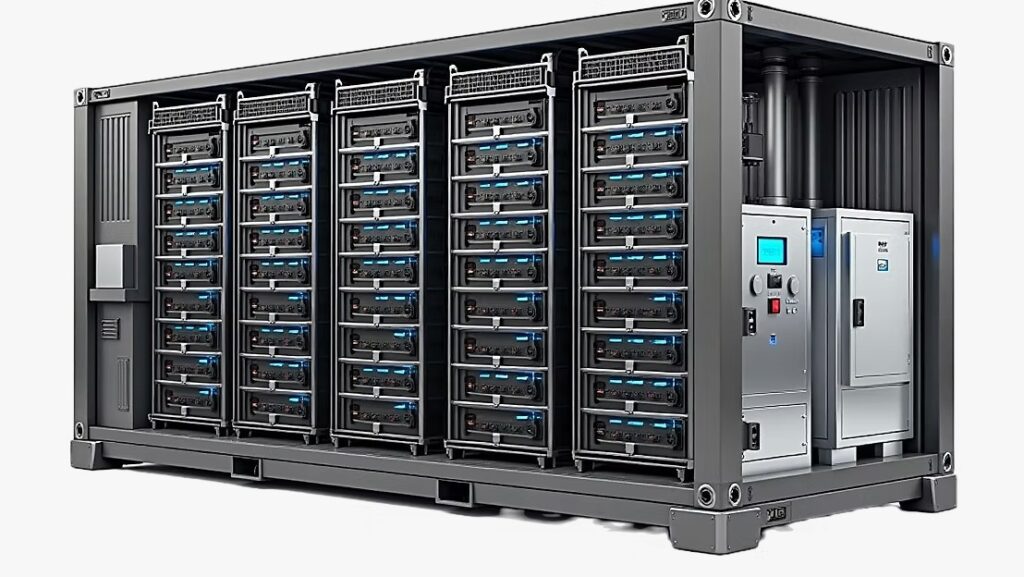
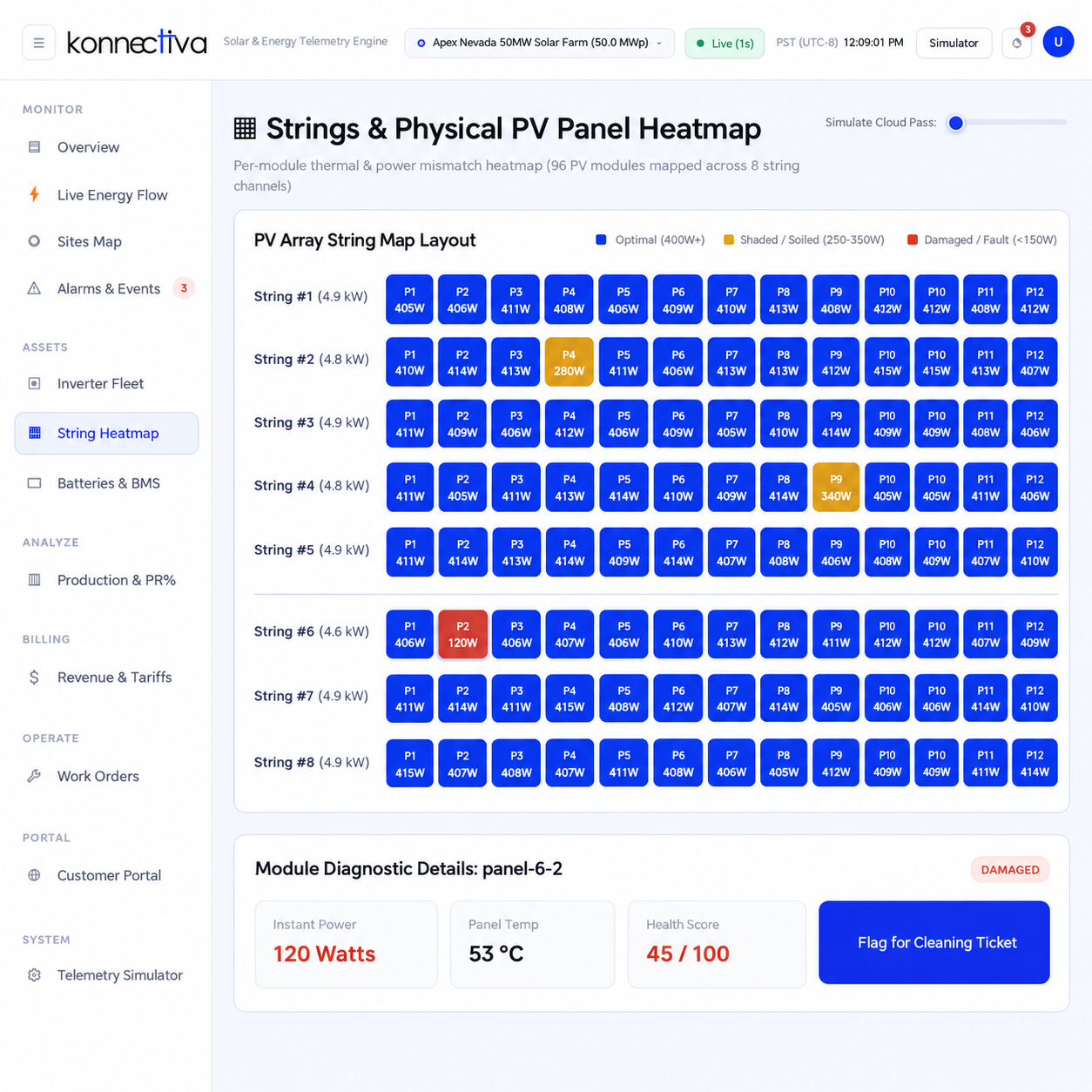
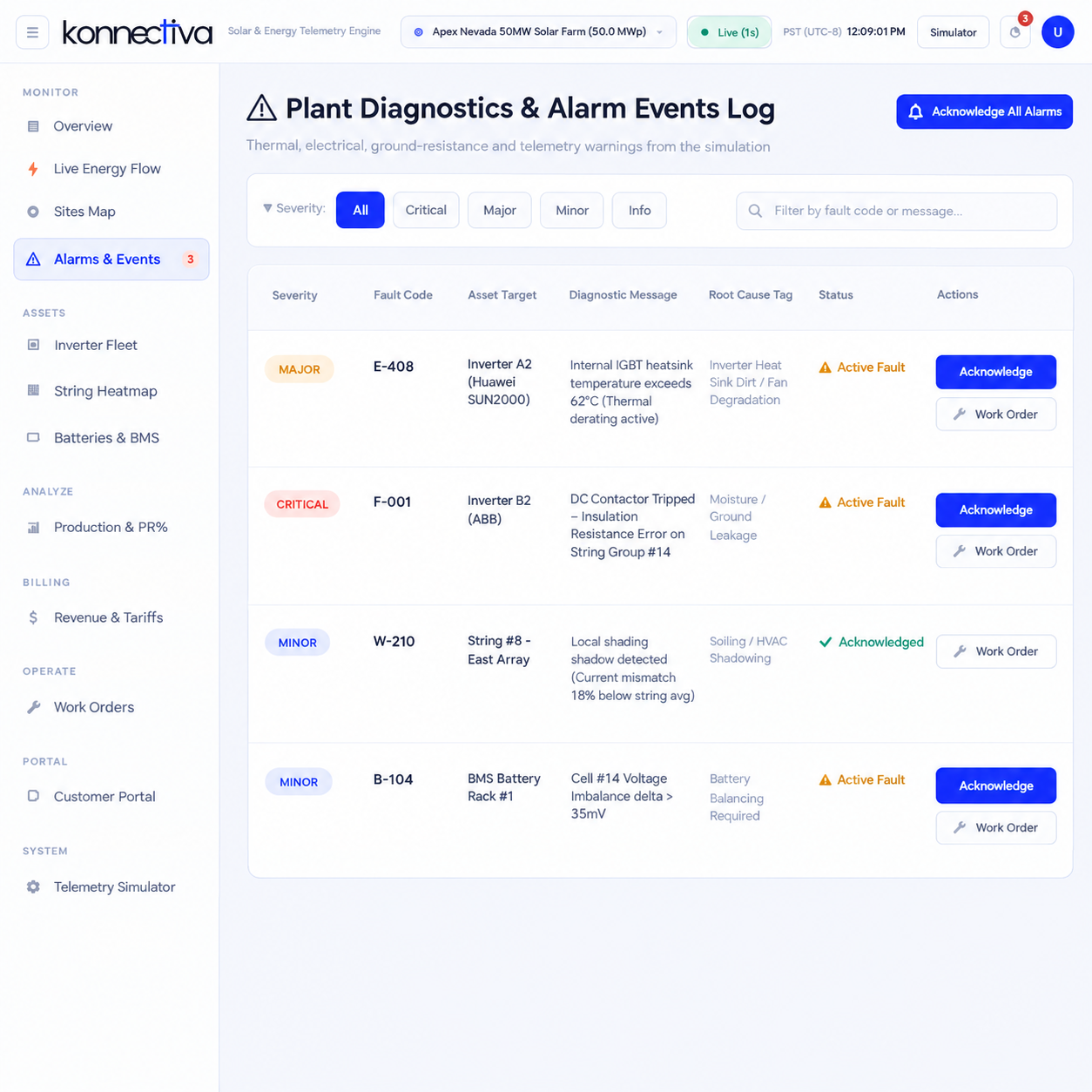

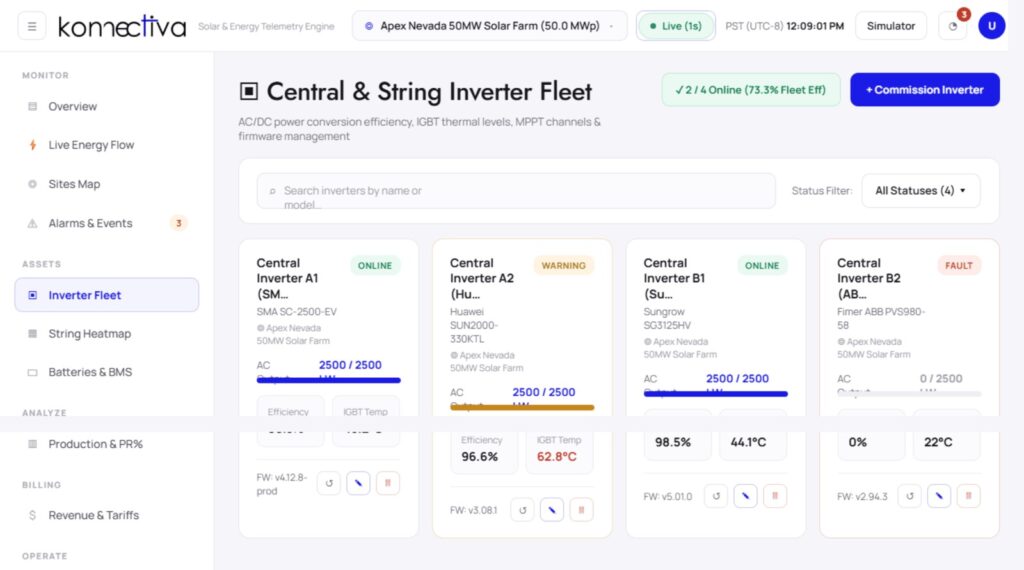
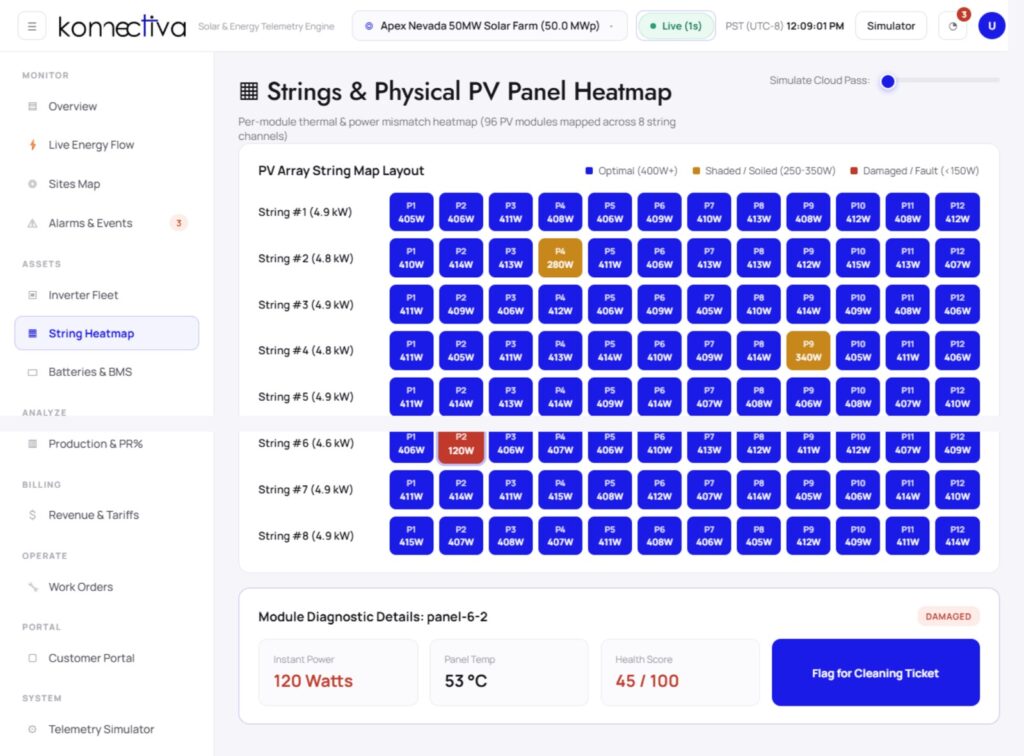
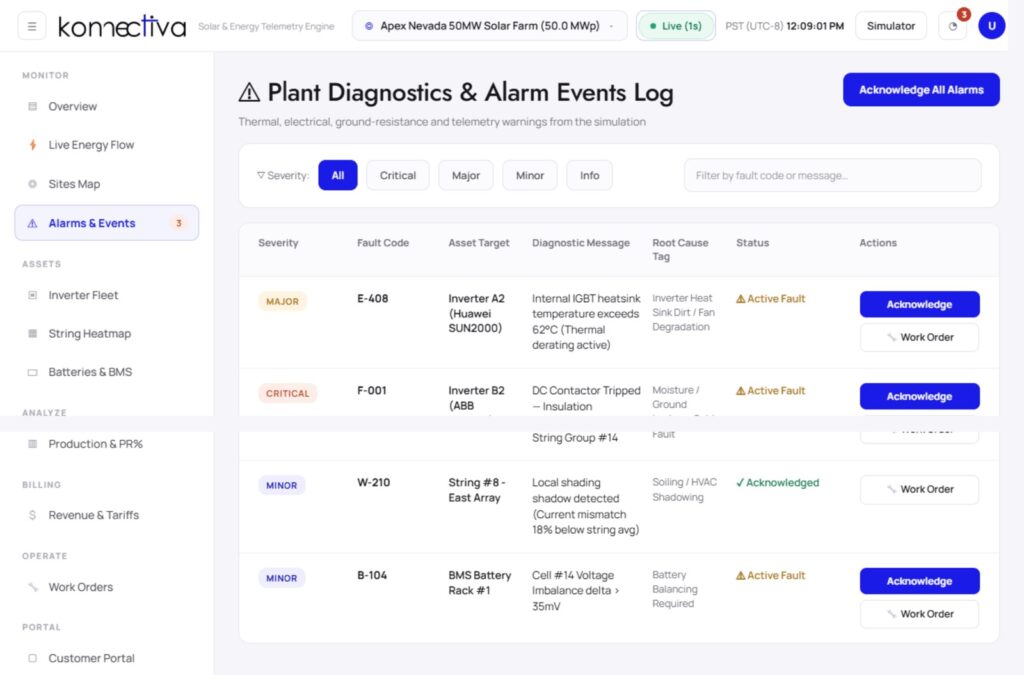
Konnectiva connects BESS, BMS, PCS, solar PV, wind, meters, grid, load, EMS and SCADA into one digital platform — real-time monitoring, analytics, intelligent energy management and predictive operations.
Battery performance depends on chemistry, temperature, charge and discharge patterns, conversion efficiency, operating limits, renewable generation, grid conditions and load demand. Displaying SOC is not enough. Operators need the answers behind it — and today those answers sit in seven disconnected systems.
Renewable integration, peak shaving, arbitrage, grid services, backup power, load management — from one architecture.
Forecast → optimization engine → dispatch, within configured SOC, power and grid limits.
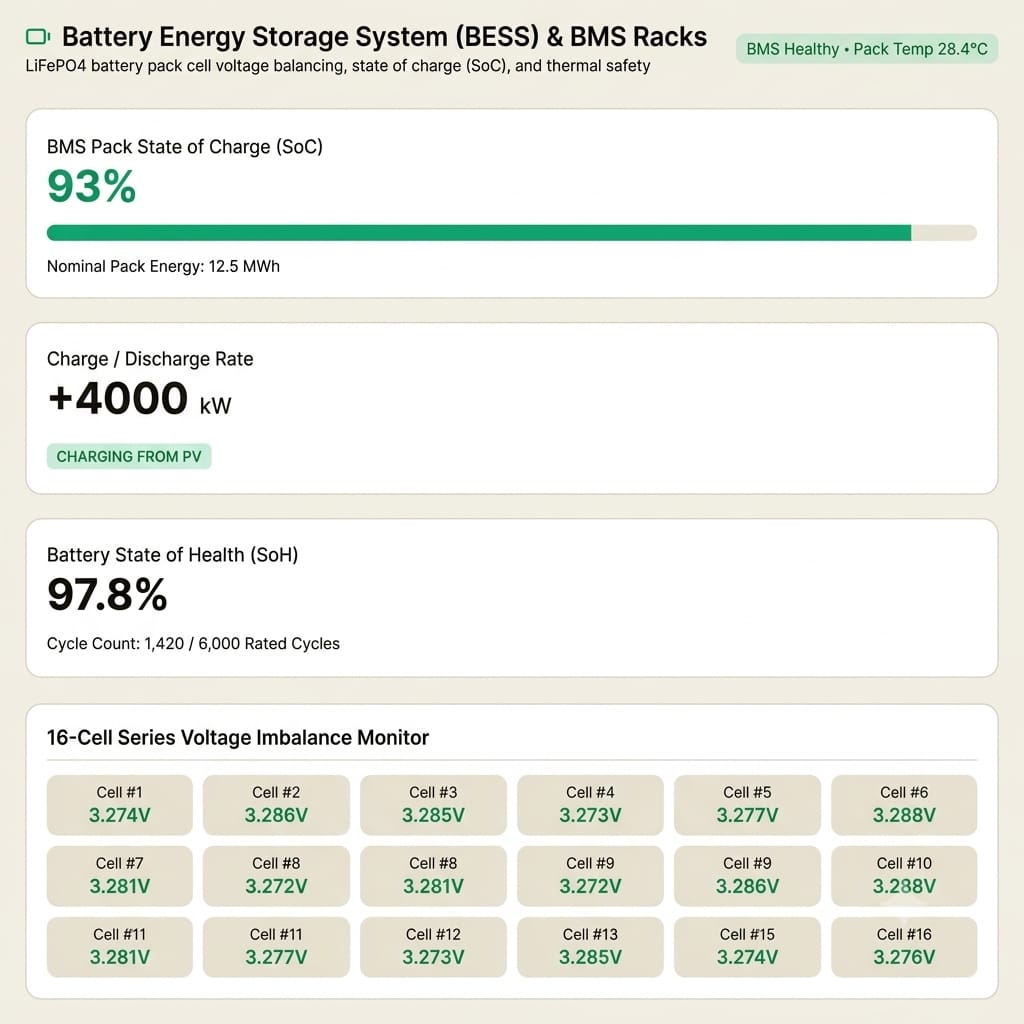
Connect the platform with your BMS and capture the full operational picture of the battery system – not just a state-of-charge gauge.
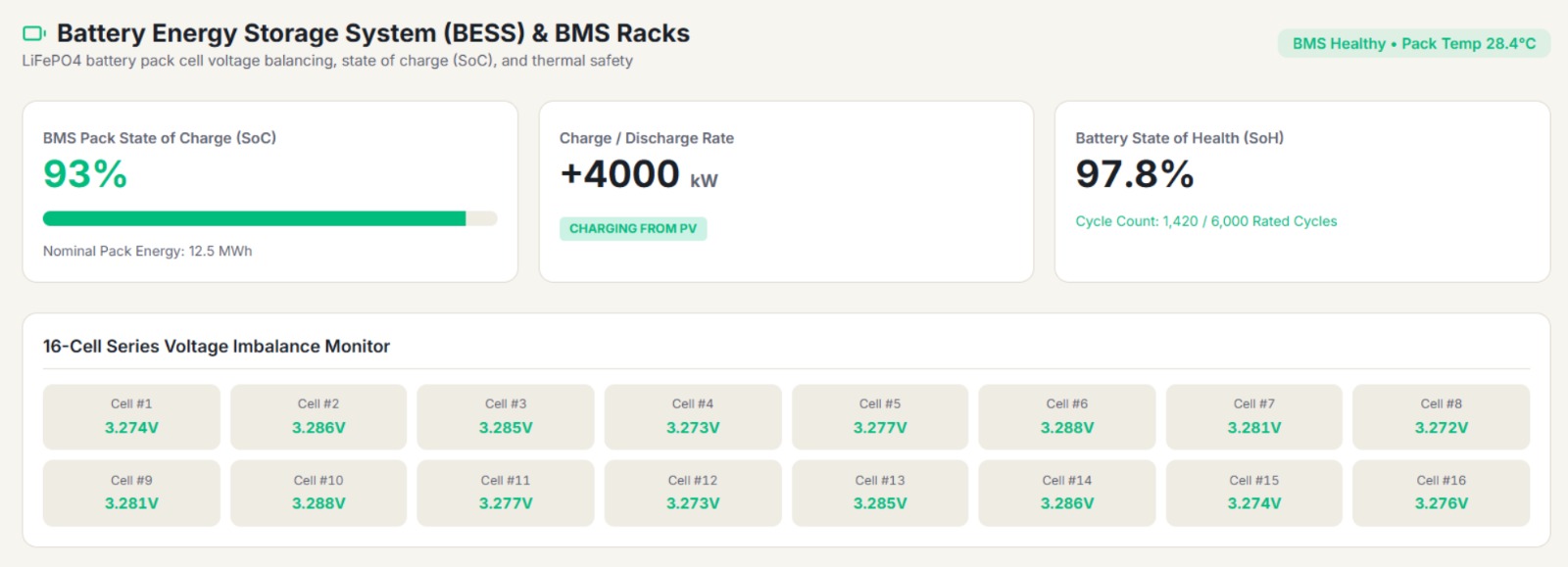
Detailed hierarchical monitoring from the site level down to individual cells.
Predictive analytics for battery degradation and behavior patterns.
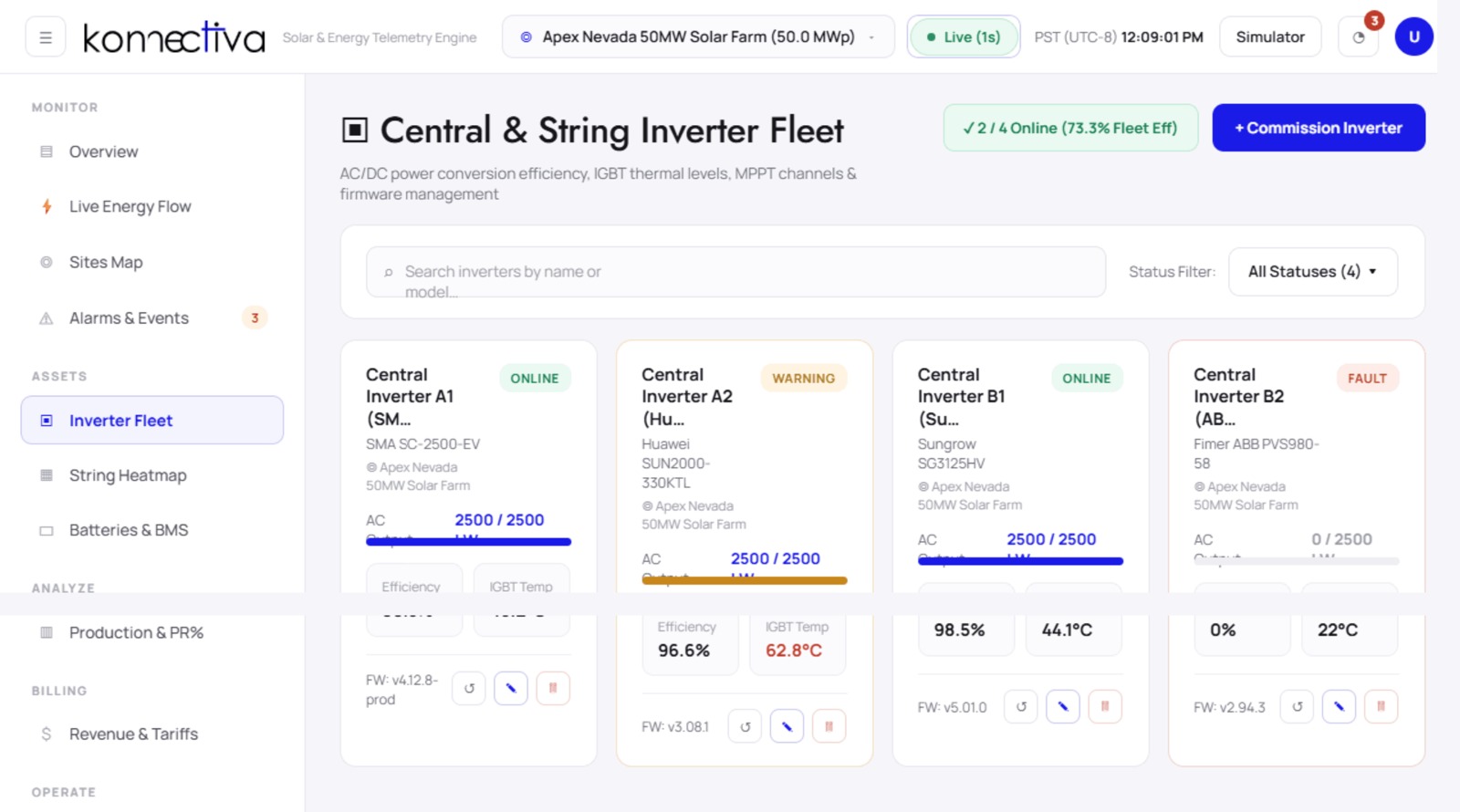
Real-time efficiency tracking of the power conversion layer.
Point of Interconnection monitoring and grid stability metrics.
Ensuring the safety and thermal stability of the storage system.
Connect the platform with your BMS and capture the full operational picture of the battery system — not just a state-of-charge gauge.
Where the BMS supports it, the platform resolves abnormalities to the specific rack, module or cell rather than the site.
Depth of visibility depends on what the BMS exposes over its interface.
The software consumes BMS data while the BMS remains responsible for safety-critical protection. The platform layer handles monitoring, analytics, optimisation, alerts, reporting and decision support.
Battery DC energy → PCS conversion → AC energy. Comparing the three exposes efficiency losses and abnormal performance early.
Track the electrical behaviour of the complete plant at the grid connection point, including scheduled power versus actual power and import/export against configured limits.
Where interfaces are available, auxiliary and safety systems are integrated alongside the electrical assets.
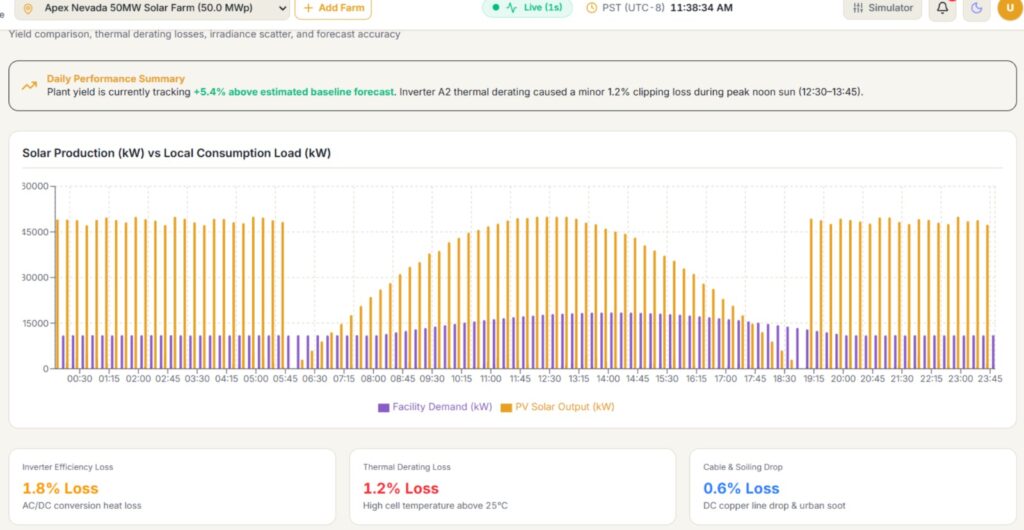
Store excess solar generation instead of exporting or curtailing it, then discharge on strategy.
Wind output fluctuates with conditions. Storage smooths the relationship between generation, load and grid.
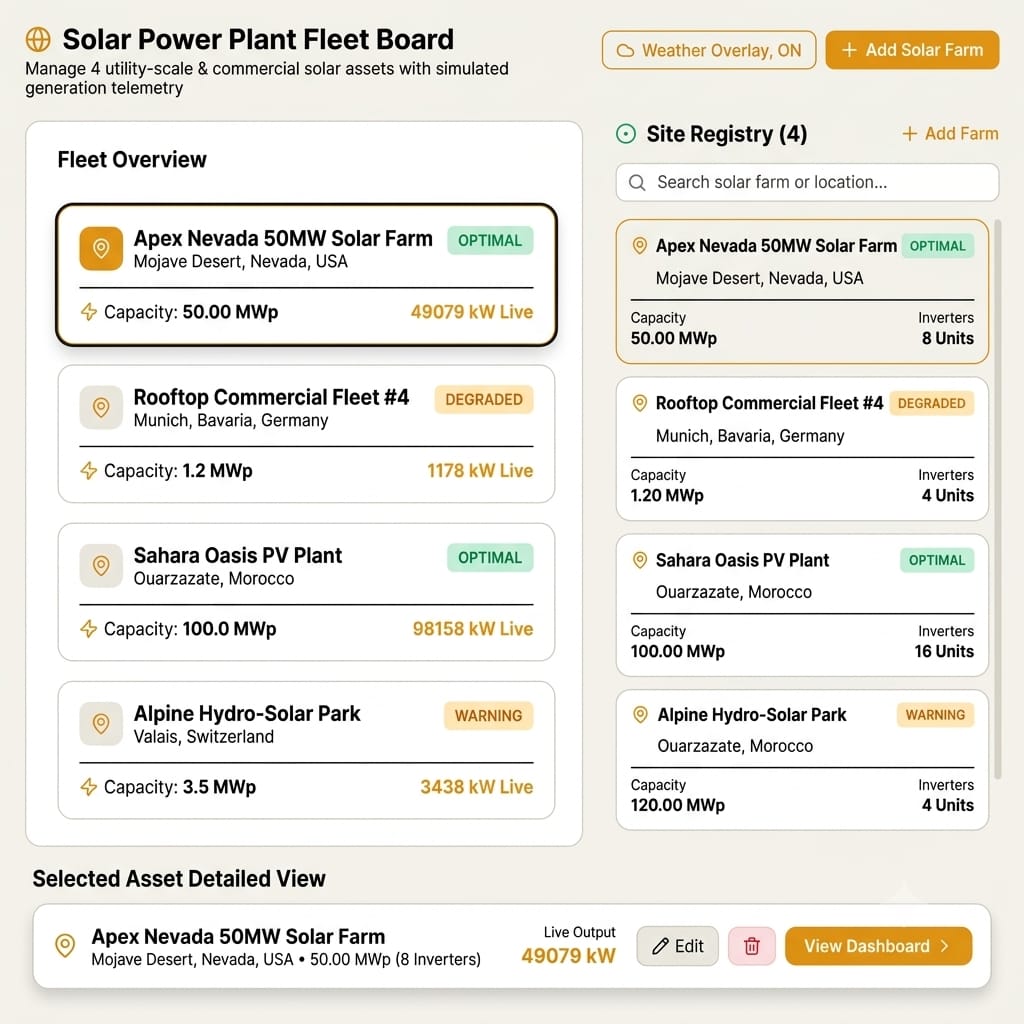
For hybrid projects, monitoring each asset independently is not enough — the platform visualises how energy moves between all of them.
Every cycle has a cost in battery lifetime, so optimization considers more than electricity prices. The objective is not to cycle the battery as much as possible — it is to maximise the economic and operational value of the battery while managing degradation.
Charge when electricity costs are lower and discharge during higher-value periods.
Discharge the BESS when site demand approaches a predefined threshold.
Store excess solar or wind generation instead of exporting or curtailing it.
Use the BESS to smooth renewable generation fluctuations.
Maintain site export within configured grid limits.
Maintain a predefined SOC reserve for backup or critical operational requirements.
Every dispatch decision is bounded by the physical limits of the asset, not just the market signal.
Last 30 days • charge, discharge and state of charge envelope
Reports export to PDF, Excel or CSV – generated manually or on a schedule.
“BESS Rack 03 is showing increasing temperature deviation compared with historical operating behaviour. Inspection recommended.”
The final integration architecture is defined from the equipment OEM, protocol documentation and project requirements — not assumed up front.
Security architecture is aligned with applicable OT/industrial requirements based on geography, equipment and compliance obligations.
Where supported by the equipment and site control architecture, authorised commands are issued through the platform and recorded in an audit trail.
Safety-critical protections remain at the appropriate local BMS, PCS, PLC or plant-control layer.
Monitor battery storage connected directly to the grid.
Store excess solar generation and optimise energy utilisation.
Use storage to manage variable wind generation.
Manage hybrid renewable generation and storage through one platform.
Peak shaving, load management and energy cost optimisation.
Coordinate renewable generation, storage, grid and critical loads.
Improve renewable utilisation and reduce grid dependency.
Smooth renewable output using battery storage.
Maintain battery reserve for critical loads and power continuity.
Monitor storage assets and operational performance.
Monitor solar, wind and hybrid projects.
Manage distributed renewable and storage portfolios.
Provide centralised post-installation monitoring.
Offer a branded monitoring platform with their systems.
Monitor customer energy assets and optimise usage.
Reduce peak demand and improve renewable utilisation.
Monitor distributed storage and grid-connected assets.
Konnectiva combines software engineering, IoT, energy technology and intelligent automation to build customised platforms for complex energy infrastructure.
Start with monitoring, expand as your portfolio and operating model grow.
Standalone BESS, Solar + BESS, Wind + BESS, hybrid renewable, C&I storage or a multi-site portfolio — we design and develop the software platform around your requirements.
Solar · wind
BESS · BMS · PCS
Load · C&I
POI · export limits
EMS · dispatch
KPIs · reports
AI · anomalies